

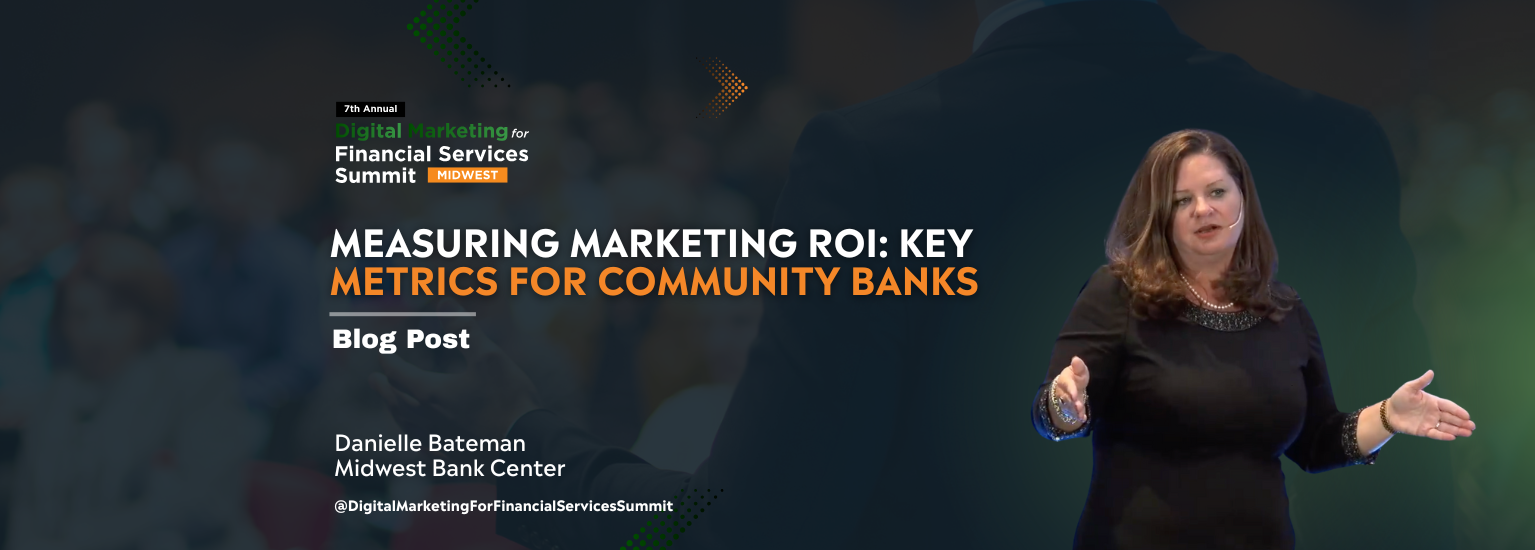
In today’s competitive financial landscape, community banks face increasing pressure to demonstrate the value of every dollar spent—especially in marketing. As marketing budgets come under scrutiny, proving return on investment (ROI) is no longer optional; it’s essential for earning trust, securing resources, and driving sustainable growth. Here’s how community banks can effectively measure marketing ROI and the key metrics that matter most.
Why Measuring Marketing ROI Matters
For many community banks, marketing has historically been seen as a cost center—an “order taker” function focused on flyers, sponsorships, and church bulletin ads. But as Danielle Bateman, Chief Marketing Officer at Midwest Bank Center, shared in a recent session, marketing can and should be a growth engine. The key is to align marketing activities with business objectives and use data to prove impact.
Key Metrics for Community Bank Marketing ROI
- Marketing Spend as a Percentage of Revenue
This foundational metric helps you benchmark your investment against both your own historical performance and industry peers. Are you spending more or less than similar banks? Is increased spend translating into measurable growth?
- New Client Acquisition
Track the number of new accounts or relationships generated as a direct result of marketing campaigns. Use unique promo codes, landing pages, or CRM tracking to attribute leads and conversions to specific initiatives.
- Cross-Sell and Retention Rates
Marketing isn’t just about bringing in new clients—it’s also about maximizing the value of existing ones. Monitor cross-sell rates (e.g., how many clients have multiple products) and retention rates to gauge the effectiveness of your engagement strategies.
- Deposit Growth
For banks, deposit growth is a critical indicator of success. Measure the increase in deposits attributable to marketing efforts, whether through targeted campaigns, product launches, or community events.
- Cost Per Acquisition (CPA)
Calculate how much it costs to acquire each new client. This helps you compare the efficiency of different channels (digital, events, referrals, etc.) and optimize your marketing mix.
- Brand Awareness and Share of Voice
While harder to quantify, brand awareness can be measured through surveys, social listening, and tracking earned media mentions. An increase in positive sentiment or share of voice often correlates with long-term growth.
- Digital Engagement Metrics
Monitor website traffic, click-through rates, social media engagement, and video watch times. These metrics provide early indicators of campaign effectiveness and audience interest.
Tips for Proving Marketing ROI
- Align with Business Goals: Ensure every marketing activity ladders up to strategic objectives like revenue growth, client acquisition, or retention.
- Get Buy-In from Leadership: As Danielle emphasized, having your CEO and CFO advocate for marketing spend is invaluable. Use data to tell your story and secure their support.
- Build a Multi-Year Roadmap: Not every initiative will pay off immediately. Set expectations with a roadmap that prioritizes high-impact activities and tracks progress over time.
- Leverage Technology: Use CRM systems, marketing automation, and analytics tools to track and report on key metrics.
- Celebrate and Share Wins: When marketing drives measurable results, share those successes across the organization to build credibility and momentum.
Conclusion
Measuring marketing ROI isn’t just about justifying your budget—it’s about transforming marketing into a strategic driver of growth. By focusing on the right metrics and aligning with business goals, community banks can prove the value of marketing and unlock new opportunities for success.
This blog post is based on the 2024 DMFS Midwest Summit session featuring Danielle Bateman, Chief Marketing Officer at Midwest Bank Center.